
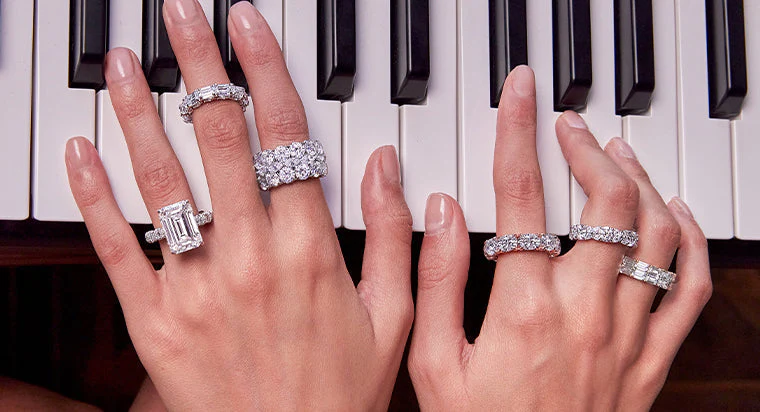
Stacking rings has become a major part of modern bridal styling, but creating a stack that feels balanced takes more than simply adding multiple bands together. The most refined stacks are intentional. They combine different shapes, widths, and textures while still leaving enough visual space for each ring to stand out individually.
Here’s how to style wedding bands in a way that feels balanced, wearable, and modern. For those exploring stackable bridal jewelry, With Clarity offers a range of wedding bands made to pair naturally with engagement rings while maintaining comfort, balance, and long-term versatility.
1. Start with One Main Focal Ring
Every bridal stack needs a visual anchor. In most cases, this is either the engagement ring or the boldest band within the stack.
Once the focal ring is established, the surrounding bands should support it rather than compete with it. Slimmer bands usually work best alongside larger center stones or more detailed designs because they help create balance instead of visual heaviness.
This is why many diamond wedding bands for women are now designed with slimmer profiles that layer naturally alongside engagement rings.

2. Think About the Order Before Adding More Bands
The order of the rings can change the entire feeling of the stack. Some people prefer the wedding band closest to the hand, followed by the engagement ring and then an anniversary band. Others like to frame the engagement ring with two similar bands so the center stone feels more balanced.
There is no single rule that works for every ring shape, but the stack should look intentional from top to bottom. A good way to test this is to place the rings in different orders before committing to one arrangement. Pay attention to how the stones line up, where the metal touches, and whether the stack looks too top-heavy.
A few useful order ideas include:
- A plain band below the engagement ring for a clean base
- A diamond band above the engagement ring for extra brightness
- Matching slim bands on both sides for symmetry
- A curved band placed closest to the center stone for a better fit
3. Mix Different Widths and Textures
Stacks where every ring has the exact same thickness or surface detail can quickly feel flat and boring.
A more balanced approach is mixing rings with different textures to create visual intrigue:
- A pavé band with a plain polished ring
- A twisted band beside a clean metal band
- A slim eternity band next to a slightly wider solitaire setting
The variation creates separation between the rings, allowing each one to remain visible rather than blending into one heavy stack.
4. Balance Sparkle With Plain Metal
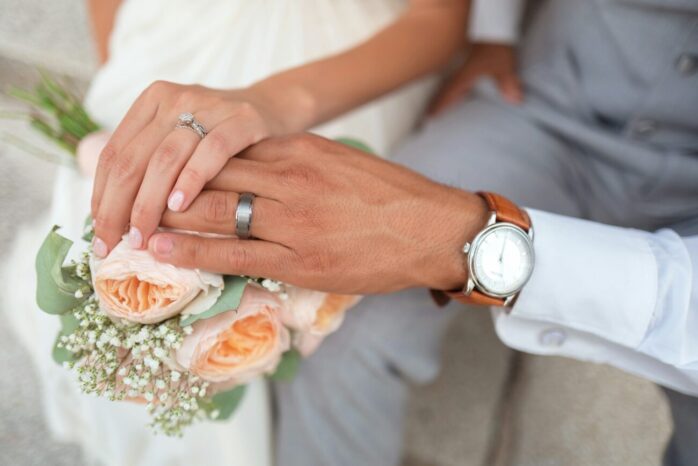
Diamond bands add beauty, but too much sparkle in one stack can make the overall look feel busy. Plain metal bands are useful because they give the eye a place to rest. They also make diamond details stand out more clearly instead of forcing every ring to compete for attention.
A polished gold, platinum, or white gold band can soften the look of multiple pavé or eternity bands. It also makes the stack feel more wearable for everyday settings, especially if the engagement ring already has a large center stone or halo detail.
The key is contrast. If one ring is highly detailed, the next one can be simpler. If one band has strong texture, another can be smooth. This creates a stack that still feels bridal and special without becoming visually overwhelming.
5. Use Thin Spacer Bands for Better Separation
When multiple diamond bands sit directly against one another, the stack can start to feel visually crowded. In some cases, the settings may also rub against each other over time.
A thin spacer band placed between larger rings creates a cleaner transition and introduces negative space into the stack. Even a very slim, plain metal band can make the entire arrangement feel more intentional and easier to distinguish visually. This technique works especially well between engagement rings and larger eternity rings.
6. Choose Bands That Follow the Shape of Your Ring
Not every engagement ring pairs naturally with a straight wedding band. Lower-set rings or elongated center stones often leave gaps when stacked with standard bands.
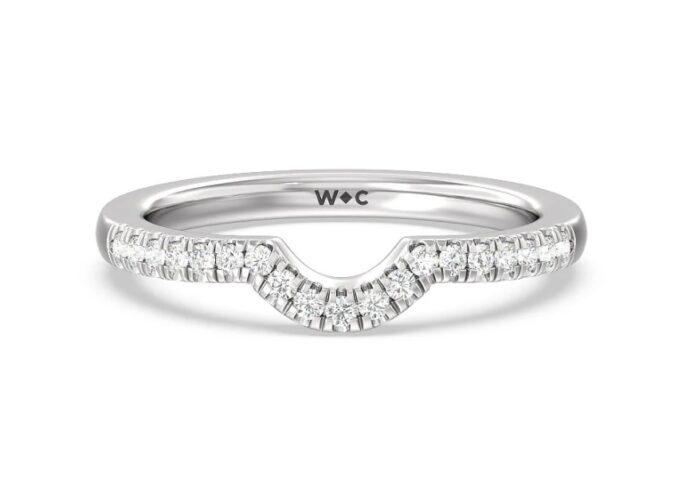
Contoured, curved, or open bands are designed specifically to follow the outline of the engagement ring more closely. This creates a cleaner fit and helps the stack feel cohesive rather than layered randomly.
Many modern wedding bands now incorporate subtle curves or chevron shapes to create a more integrated appearance.
7. Match the Stack to the Engagement Ring Setting
The setting of the engagement ring should guide the entire stack. A high-set solitaire usually gives more room for straight bands to sit neatly underneath it. A low-set ring may need a curved or open band so the pieces do not push awkwardly against each other.
Elongated shapes, such as oval, emerald, pear, and marquise stones, often look beautiful with bands that create movement around the center stone. A chevron band can point toward the stone and make the stack feel more structured. A curved band can soften the outline and make the rings look like they were chosen together.
The setting height, prong placement, and stone shape all matter. Looking at the ring from the side is just as important as looking from above.
8. Mix Metals Carefully
Mixed-metal bridal stacks continue to grow in popularity, but balance matters.
Instead of combining several different tones equally, it usually works better to keep one dominant metal and introduce a second tone more subtly. For example, a mostly white gold stack may include one rose gold or yellow gold band to add contrast without making the combination feel disconnected.
This approach helps the stack feel layered while still maintaining visual consistency.
9. Don’t Overload Every Finger
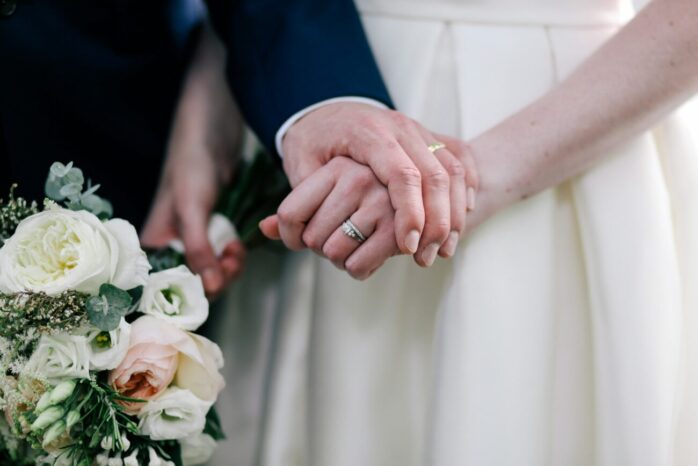
One of the easiest ways to make a bridal stack feel overdone is by adding too many rings across the entire hand.
If the ring finger already features multiple bands, it often looks cleaner to keep the surrounding fingers more minimal. A single delicate ring on the pinky or index finger usually creates better balance than stacking several additional rings nearby.
Leaving some visual space around the bridal stack allows the rings themselves to stand out more naturally.
10. Keep Long-Term Wearability in Mind
The best bridal stacks are not only visually balanced but also comfortable enough for everyday wear.
Before adding multiple bands, it helps to consider:
- How the rings sit together
- Whether they move comfortably
- If the stack feels too heavy on the hand
- How easily the bands pair with future anniversary rings
This is especially important for diamond wedding bands for women, which are often worn daily for years.
Final Thought
A well-styled bridal stack is about proportion, spacing, and balance rather than quantity. Mixing textures, varying band widths, and incorporating thoughtful spacing allows each wedding band to maintain its own identity while contributing to a cohesive overall look.


