Home Blog Page 4

10 Mistakes That Kill Your Website Conversions (and Their Fixes)

Source: blog.magezon.com

Unless you operate as brick and mortar, your website is the first point of contact with their potential customers. Tiny blunders in messaging, structure, or performance causes friction that prevents visitors from converting.

Luckily, these mistakes are mostly avoidable. By being systematic in identifying them, you can either avoid them as a whole, or fix them with ease. Doing so will improve the number of generated leads, signups, or sales your site generates. Here are 10 of the most common website mistakes that you will want to avoid:

Mistake 1 ─ Confusing Messaging

Start by imagining that you are in your visitor’s shoes. Would you understand what the brand does based on the website within the first minute of landing on the page? The point is, if either your landing page (LP) or home page (HP) leads with jargon or vague statements, your visitors will drop from your site.

If users form an opinion about a website in 0.05 seconds, then clarity is not optional. It’s the antidote to your users leaving for your competitors.

How to Fix It

  • Lead with benefits and outcomes your users get, as opposed to features. Instead of “Ramp Reps, Launch Products or Roll-out Best Practices in Weeks, not Quarters”, say “AI sales simulation platform to make reps productive in weeks instead of quarters.”
  • Add a subheadline that explains the “how” in plain terms.
  • Follow the rule of thumb: if your friends outside your industry can’t explain what you do after 10 seconds, rewrite until they can.

Example: Avarra AI homepage headline we used as an example earlier communicates scope of their platform in simple words, followed by a subline that explains the specifics of how they achieve what they set out to do.

Avarra AI

Mistake 2 ─ Weak Calls-to-Action

If your users are not clear on how clicking your call to actions (CTAs) will benefit them, or what happens after the interaction, they will be confused and likely won’t convert. Form buttons with text such as “Submit,” or link text such as “Learn More” doesn’t really explain what will happen if they click.

A study by HubSpot found that personalized CTAs convert 202% better than default ones.

How to Fix It

  • Use action-oriented language. Good examples are “Book a Demo,” “Start Free Trial,” “Schedule a Free Consultation” or “Download the Checklist.”
  • Use the space above the fold to showcase your CTA and repeat placements and wording naturally throughout the page.
  • Match the CTA with the page’s intent: if the page is of commercial intent, offer demos for buyers. Else if it’s informational, offer either newsletter signups, resource downloads, or both.

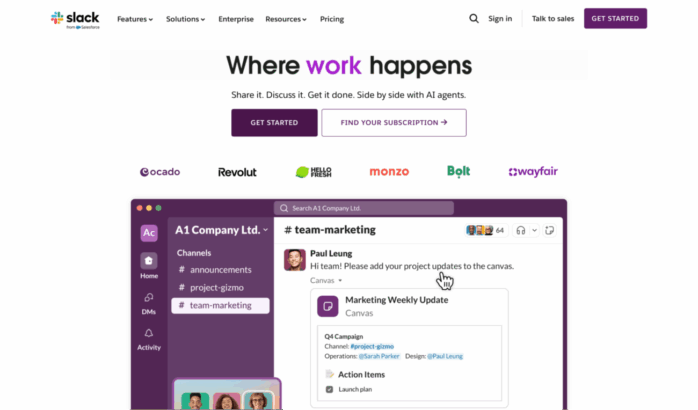
Example: The CTA on Slack’s HP is a great example. “Find your Subscription” is direct, one of the first things you see on page, and speaks to intent. That surely outperforms vague alternatives like “Explore pricing.”
Mistake 3 ─ Slow Load Speeds

Website visitors have little patience for slow performance. Google research shows that a 1-second delay in mobile load times can impact conversion rates by up to 20%.

How to Fix It

  • Compress and optimize images and videos. The rule of thumb is to use WebP or Avif for images and WebM for videos.
  • Use modern hosting and CDNs.
  • Third-party scripts add to the loading time. Your options are to defer them, load them async, or get rid of them as a whole.
  • Run a monthly audit using tools like Google PageSpeed Insights or GTmetrix. Videos always add to the loading time, so make sure you’re clear on your priorities.

Example: Pinterest increased search engine traffic and signups by 15% after cutting perceived load times by 40%.
Mistake 4 ─ Cluttered Navigation

Overloaded and poorly organized menus is a surefire way for your visitors to get lost and unable to find whatever they were looking for. Yes, it means they will leave.

Based on various researches, poor navigation design accounts for nearly a half of site abandonments during e-commerce browsing.

How to Fix It

  • Limit top-level navigation to 5–7 categories.
  • Group related pages under logical dropdowns.
  • Include a visible search bar for content-heavy sites.
  • Test navigation by asking non-team members to complete key tasks.

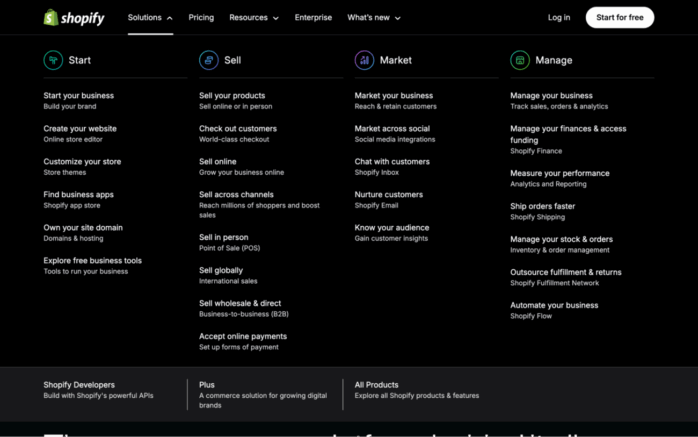
Example: Shopify has a brilliant way of organizing their navigation. They do it in a way where the buyer is the hero, and depending core journeys the visitors take, they give you the tools to ”start” your journey, continue “selling” your products, “marketing” your products, and improving “management” of your business.
Mistake 5 ─ No Social Proof

Without proof that others trust you, visitors hesitate. Social proof reduces risk and builds confidence.

According to BrightLocal, 46% of consumers trust reviews as much as personal recommendations.

How to Fix It

  • You should show your client / customer logos, partnerships, and integration logos.
  • Add as many testimonials and case study snippets. The goal is to show outcomes your buyers have reached through your help.
  • Display user counts, adoption stats, or press mentions.
  • Include ratings or awards where applicable.

Example: Notion’s homepage features logos of global companies and community testimonials, reinforcing credibility instantly.

Mistake 6 ─ Ignoring Mobile Users

Over 60% of all web traffic worldwide is using mobile to surf the web. On one hand, if your site isn’t optimized for mobile, over half of your audience will find your site inaccessible. On the other hand, it’s not related to B2B segments as around 80% of B2B traffic comes from desktop devices and they almost never convert.

The verdict? If you don’t want to make your visitors happy, at least make Google happy and optimize for mobile.

How to Fix It

  • Use responsive design. Cascading Stylesheets (CSS) is a basic web technology that’s very helpful in making it happen.
  • Test buttons and forms on mobile devices. Ensure tap targets are big enough.
  • Optimize visuals for small screens. If it doesn’t scale well, you might want to consider using a different visual asset.

Example: Dropbox stacks the layouts vertically. The brand also uses large CTAs with lots of white space on mobile, ensuring the experience is as frictionless as desktop.

Mistake 7 ─ Weak Forms and Lead Capture

People are lazy, The shorter your forms, the less users will bounce. Studies show form length directly impacts completion rates, with conversion dropping as fields increase.

How to Fix It

  • Keep forms short, asking only for essentials. Usually full name and email suffice.
  • Use progressive profiling: gather more info over time. You can always use enrichment tools to enrich the collected data through email.
  • Add clear labels and error handling messages. Those help users with their expectations.

Example: After testing a shorter lead-gen form, HubSpot and saw conversions increase by 50%.

Mistake 8 ─ Stocky, Generic Visuals

I’m not advocating for spending a lot of money on custom visual assets and UI. Those can get expensive fast. However, the more generic your visuals, the more your site looks like a cookie cutter template. “If you don’t put thought into your site, you don’t do it when it comes to your product either” is a common thought process.

How to Fix It

  • Use original product, team, or customer photos.
  • Create branded visuals that reflect your identity.
  • Replace filler stock with graphics that explain value.

Example: Basecamp uses team photos and custom illustrations, creating personality and differentiating from competitors who use the same stock assets.

Mistake 9 ─ No Clear Funnel Paths

Don’t let your visitors think about the wrong things. They should never wonder where to go next or what to do next. Make sure to have a clear funnel path through interlinking on site. This way you will decrease drop-offs.

How to Fix It

  • Map journeys: homepage > product overview > proof > CTA.
  • Use consistent CTAs across sections of each page.
  • Ensure no page is a dead end.

Example: Canva guides users from signup > templates > editor seamlessly, ensuring the funnel feels intentional.
Mistake 10 ─ Neglecting SEO Basics

Even the best site won’t convert without traffic. Ignoring SEO means fewer opportunities to win customers.

How to Fix It

  • Conduct keyword research tied to intent.
  • Optimize titles, metas, headers, and alt text.
  • Build internal links to strengthen authority.
  • Publish content that targets top, middle, and bottom funnel keywords.

Example: Ahrefs rebuilt its blog with intent-driven content and saw traffic grow to over 3 million monthly visitors.

Conclusion

Conversion-focused websites succeed because they avoid common pitfalls. By fixing weak messaging, poor CTAs, slow speeds, or missing proof, you remove friction and create a smoother path for users. Every improvement compounds, leading to more signups, demos, or sales.

But here’s the sharper takeaway: websites are not static assets. They are performance signals that investors, customers, and search engines judge within seconds. Research shows 94% of first impressions are design-related.That means design and messaging aren’t just cosmetic — they directly influence trust and growth.

A website is not just a brand presence, it is a performance engine. Treat it as such, and it will reward you with measurable results. If you want expert help in building or optimizing one, hire a Webflow Development Company specializing in creating sites that perform, convert, and scale with your business.

Hidden Costs of Hard Water Damage for Airbnb and VRBO Hosts in Honolulu

Source: kokokalango.com

Vacation rentals in Honolulu live and die by guest experience. Guests often arrive expecting sparkling bathrooms, crystal-clear showers, and kitchens that feel well cared for. Yet one hidden factor quietly undermines that picture: hard water damage.

For many Airbnb and VRBO hosts, the problem doesn’t reveal itself until reviews mention “dingy glass” or “old-looking bathrooms,” even when the property itself is relatively new.

What appears to be minor spotting or dullness on glass can translate into costly reputational and financial setbacks if left untreated.

Why Hard Water Matters More in Honolulu

Source: istockphoto.com

Honolulu’s island setting offers incredible beaches and weather, but it also brings unique challenges for property owners. Local water sources often carry high mineral content. Over time, calcium and magnesium deposits cling to shower doors, faucets, and sinks. What starts as faint white spots can harden into cloudy stains that resist ordinary cleaning products.

Hosts may try scrubbing with vinegar or store-bought sprays, but these rarely solve the deeper etching. Instead, layers of buildup slowly damage surfaces, making glass appear permanently aged.

And unlike a scuffed tile or chipped paint, etched shower glass dominates the bathroom visually, giving guests the impression that cleanliness is lacking – even when the rest of the unit is spotless.

The True Price Tag of Cloudy Glass

Source: southingtonglass.com

Hard water damage isn’t just cosmetic. For rental hosts, it triggers a chain of expenses that often exceeds expectations:

  • Accelerated replacements: Shower glass that could last 15 years might need swapping after only 5–7 years.
  • Increased cleaning hours: Housekeepers spend extra time tackling stubborn deposits, driving up labor costs.
  • Supply waste: Harsh cleaning chemicals are used more often, wearing out fixtures and adding supply expenses.
  • Booking losses: Even one critical review mentioning “dirty shower” can reduce future bookings significantly.

What many hosts overlook is that these costs don’t arrive all at once—they chip away over seasons, making operating margins thinner and less predictable.

Prevention and Restoration: Smarter Than Replacement

Replacing glass might feel like the only option once spotting sets in. Yet restoration offers a more sustainable path. Professional services specializing in hard water spot removal can restore shower doors and windows to near-original clarity. Unlike DIY fixes, these treatments target the mineral etching itself, extending the life of the glass while keeping bathrooms guest-ready.

The advantage for hosts is twofold: upfront savings compared to replacement, and fewer negative guest perceptions. Instead of gambling with expensive renovations every few years, a cycle of restoration and preventive care stabilizes property budgets.

Guest Reviews: The Ripple Effect

Source: blog.zarnik.com

In the short-term rental world, reviews act as currency. A single comment about a bathroom that felt “grimy” can weigh more heavily than positive notes about location or amenities. Guests rarely understand that cloudy glass is caused by minerals, not poor cleaning. All they see is a surface that looks neglected.

For repeat visitors—common in Honolulu’s vacation market—this detail becomes even more critical. A guest who books annually may skip returning if they notice bathrooms looking older with each stay. Over time, this erodes occupancy rates and forces hosts to discount nightly prices to stay competitive.

Comparing Costs: Replacement vs. Restoration

Factor Replacement (per panel) Professional Restoration
Upfront cost $600–$1,200 $150–$300
Average lifespan gained 7–10 years 3–5 years per treatment
Guest perception “Like new” “Looks refreshed”
Environmental impact High waste (glass + metal) Low waste, extends use

What stands out in these comparisons is not just the price difference, but the flexibility. Restoration allows hosts to manage expenses in stages, aligning treatments with booking revenue rather than facing a large capital expense all at once.

Preventive Care Guests Never Notice

Source: riho.com

Some preventive steps may not show up in a guest’s review, but they pay off quietly to avoid damage. For example:

  • Soft squeegees left in the shower encourage guests to wipe down doors.
  • Protective coatings applied after restoration slow new buildup.
  • Filtered showerheads reduce the mineral concentration at the source.

These measures extend the time between restorations while subtly preserving the bathroom’s fresh look. The result is a property that feels consistently cared for without obvious maintenance interventions.

One overlooked reality is that homeowner’s insurance or short-term rental policies don’t classify hard water damage as an insurable event. It falls under “maintenance neglect,” meaning hosts shoulder the entire cost. That makes proactive solutions not just wise, but necessary for long-term profitability.

The Honolulu Market’s Competitive Edge

Source: visittheusa.com

In a crowded market like Honolulu, where hundreds of properties compete for attention on Airbnb and VRBO, presentation often decides who gets booked. Listings with bright, clear bathroom photos tend to outperform others, even if the square footage or location is less ideal. On the flip side, photos showing glass that looks streaky or dull can cause potential guests to scroll past.

Restoration becomes not just a maintenance tactic but a marketing strategy. A one-time investment in refreshed glass pays dividends in higher visibility and stronger conversion rates.

Long-Term Payoff for Hosts

The most striking benefit of addressing hard water damage is how it stabilizes long-term income. Instead of sudden, costly replacements or unpredictable review penalties, hosts can map out a schedule of regular restoration and preventive care.

This allows for more accurate budgeting and reduces the stress of last-minute fixes between bookings.

At scale, this approach reshapes the economics of property management. A host with three or four units might save thousands annually, all while protecting their reputation and maintaining steady occupancy.

A Clear Strategy for Clear Glass

Hard water is an invisible expense that eventually makes itself visible to every guest. For Honolulu hosts, the stakes are higher, since bathrooms play such a central role in guest impressions and reviews. By choosing restoration and preventive care over repeated replacements, Airbnb and VRBO hosts protect their bottom line while ensuring guests walk into bathrooms that feel fresh and inviting.

The hidden costs of hard water damage are only hidden until they appear in your reviews. Addressing them now means fewer surprises later and more guests walking away with the sense that your property delivered exactly what they came for: a clean, memorable stay in paradise.

Step by Step Guide to Building Immersive Spaces and Interactive Content Inside VRChat Worlds

Virtual reality has moved far beyond experimental demos and now offers fully realized platforms where people socialize, create, and share experiences.

VRChat stands at the center of this shift, providing creators with a powerful sandbox to design immersive environments and interactive content.

If you are curious about building your own VRChat world, this guide walks you through the process in clear stages, while also touching on the creative and technical decisions that make a world feel alive.

1. Understanding the Creative Potential of VRChat

Source: voicesofvr.com

VRChat is more than a hub for avatars and casual chats; it is a framework for interactive storytelling, event hosting, and community building.

Users spend time in worlds that feel complete, with spatial design, visual storytelling, and interaction mechanics shaping the experience. The more immersive and interactive your environment is, the more likely people will return and invite others to join.

Creating worlds for VRChat blends three skill sets:

  • Artistic vision – designing the mood, style, and overall identity of the space.
  • Technical execution – using Unity and VRChat’s SDK to bring models, textures, and scripts to life.
  • Community awareness – understanding what players seek in multiplayer spaces, from social hangouts to interactive games.

2. Setting Up the Foundation with Unity and VRChat SDK

Before you dive into world-building, you need the right setup. Unity is the engine behind VRChat, and the SDK (Software Development Kit) provided by VRChat is the bridge that connects your creative work with the platform.

  1. Download Unity Hub and install the Unity version recommended by VRChat’s documentation.
  2. Install the VRChat SDK, choosing between SDK2 (simpler, fewer features) and SDK3 (the advanced system supporting Udon, the scripting engine for interactivity).
  3. Create a Unity project and link it to VRChat through the SDK panel, which allows you to upload and test worlds.

At this stage, your focus is on setting up a clean workspace. Think of it as laying down the foundation of a building; the structure only stands if the basics are solid.

3. Building the Geometry and Layout of Your World

Source: ask.vrchat.com

A VRChat world starts with geometry: the shapes and structures that define where people walk, gather, or explore. This doesn’t require complex architecture, but it does demand thoughtful planning. Ask yourself: do you want users to relax in a lounge, play a mini-game, or navigate a maze-like environment?

  • Blocking out space: Start with simple cubes and planes in Unity to shape the environment. This helps you test scale before committing to detailed models.
  • Optimizing for VR: Keep geometry efficient. Overly detailed meshes can cause performance drops, which ruin immersion.
  • Lighting strategy: VRChat allows baked lighting for realism without heavy performance costs. Use lightmaps and reflection probes carefully.

3. Adding Textures, Materials, and Visual Identity

Textures transform plain geometry into believable spaces. A café with polished wood, glowing neon signs, and reflective glass feels authentic, while flat, untextured surfaces remind users they are in a prototype.

Here is where tools that convert an image to 3d can accelerate your workflow. This allows you to take reference images or concept art and generate usable 3D assets. It not only speeds up asset creation but also ensures visual consistency when building large environments.

When working with materials:

  • Use PBR (Physically Based Rendering) textures for realism.
  • Balance detail with performance by controlling texture resolution.
  • Apply shaders sparingly; while they add style, they can be GPU-intensive.

4. Introducing Interactivity with Udon and Triggers

A static environment may look nice, but interactivity makes it memorable. VRChat’s Udon system allows creators to add logic and behaviors to their worlds without traditional coding knowledge.

Some popular uses of interactivity include:

  • Doors and buttons that respond to player actions.
  • Games and challenges built with Udon logic, such as parkour courses or puzzles.
  • Social mechanics like synchronized media players, mirrors, or photo booths.

The key is balancing interaction with flow. If every element demands attention, users may feel overwhelmed. Instead, design focal points where interactivity enhances, not distracts.

5. Optimizing Performance for Smooth VR Experiences

Source: bestoffthebeatentravel.com

Performance optimization is often the difference between a world that feels magical and one that feels frustrating.

VR users are sensitive to frame drops, so keeping your world efficient is essential.

  • Polygon count: Reduce unnecessary detail in meshes.
  • Texture compression: Lower file sizes to reduce load times.
  • Occlusion culling: Hide objects when they’re not visible to the player.
  • Dynamic vs. baked lighting: Use baked lighting wherever possible to lighten the GPU load.

A well-optimized world attracts more visitors because it runs smoothly across devices, from high-end VR rigs to standalone headsets.

6. Testing and Iterating with Community Feedback

No first version is perfect. Upload your world as a private build first, test it with friends, and observe how they navigate the space. Do they get stuck in corners? Do they notice the interactive elements? Are there areas that feel too empty or too crowded?

Community feedback is one of VRChat’s strongest assets. The platform thrives on shared creativity, so inviting others to test your world often leads to valuable insights you might miss on your own. Iteration is part of the process.

7. Publishing and Sharing Your World

Once you are satisfied, you can publish your world to VRChat. The SDK provides a straightforward upload system, where you fill in details like:

  • World name and description
  • Tags for discoverability
  • Thumbnail images

A compelling thumbnail and description can significantly increase traffic to your world.

Treat it as a marketing opportunity—show potential visitors why your world is worth exploring.

8. Expanding Beyond Basics: Events and Social Design

Source: arvrjourney.com

Building a VRChat world isn’t only about geometry and textures. The most successful worlds integrate social design, creating spaces for events, group activities, and repeat visits. Some creators host weekly meetups, game nights, or even live music performances inside their worlds.

Think about:

  • Flow of movement: where people naturally gather, and whether there’s enough space for groups.
  • Sound design: background audio and spatialized sound can elevate immersion.
  • Seasonal updates: refreshing visuals or adding new features keeps players returning.

Final Thoughts

Creating immersive VRChat worlds is both a technical and artistic journey. You start with the basics of Unity and the SDK, shape environments with thoughtful design, and add layers of interactivity that transform a space from static to dynamic.

By optimizing performance, iterating with feedback, and focusing on community engagement, your world can become a place where people want to spend time, not just visit once.

European Walking Routes That Will Blow Your Mind

Hikers on a cliff edge overlooking a dramatic mountain range in Europe
Source: pexels.com

If you have ever come back from a holiday feeling like you only saw the landmarks from behind a bus window, then you’re not alone. For many people, conventional tourism is not cutting it; each year, more and more people are looking for something extra when it comes to traveling, which is why walking holidays have increased a lot in popularity. It’s a different way to travel, one that lets you truly connect with a place.

Those holidays are about the journey itself, immersing in the local culture and the feeling of earning the right to see a spectacular view. It’s a type of travel that engages all your senses and leaves you with stories, not just souvenirs, and there’s no better place to start than Europe! We’ve chosen five of Europe’s most incredible trails that promise exactly that kind of authentic, mind-blowing experience.

Planning Your Walk with Orbis Ways

Source: vacationstravel.com

First, a walking holiday consists of traveling to places to hike, usually doing several hikes or one big long-distance hike, and as you can imagine, yes! Organizing an international walking trip can be overwhelming, which is where a specialist hiking agency like Orbis Ways becomes your best friend. They know how and why people choose walking holidays; that’s why most of their services are self-guided walking holidays, and they excel at it. T

heir teams are composed of actual hikers, which is why they know exactly what to offer in order to secure a successful trip, handling all the logistics so you can simply enjoy the trail. They book your accommodations, which range from guesthouses to hotels, and transport your luggage ahead to each stop, meaning you only need to carry a light daypack.

They provide detailed, easy-to-follow route notes and maps, making sure you can walk with confidence. The countless positive reviews from customers consistently praise their friendly customer service, careful planning, and ability to create a stress-free experience.

They offer tailored trips on many routes, and here are some of the most popular:.

The Camino de Santiago in Spain

The Camino de Santiago, or the Way of St. James, is far more than a simple hike; it’s a historical pilgrimage route ending at the cathedral of Santiago de Compostela in northwest Spain. It welcomes thousands of people each year, making it one of the most popular networks of trails in the world.

While its roots are religious, today people walk it for spiritual, fitness, and cultural reasons. The most famous trail is the Camino Francés, which stretches nearly 500 miles from France across northern Spain. You don’t need to walk the entire thing; many choose a final section like the last 60 miles from Sarria.

The path is well-marked with iconic yellow arrows and scallop shell symbols. You will also find several landmarks and iconic places along the way, but the real magic lies in the international community of walkers you meet.

The Tour du Mont Blanc in France

For those who dream of visiting the Alps, the Tour du Mont Blanc is the ultimate European trek. This is a classic circuit that has been walked for ages. The hike completes a loop around the Mont Blanc massif and passes through different countries (France, Italy, and Switzerland), covering over roughly 105 miles. It is often considered a challenging but incredibly rewarding hike that takes about 11 days to complete.

You will experience three distinct cultures while staying in different remote mountain refuges or alpine towns, also you will be able to try local specialties like French cheese, Italian pasta, and Swiss chocolate. It is a truly immersive mountain adventure that consistently ranks as one of the best walks in the world.

The Path of the Gods in Italy

This trail is known locally as Sentiero degli Dei and runs along the Amalfi Coast above the Mediterranean Sea. Just by reading, you can already have an idea of how amazing this trail is. It is a shorter route, often taking just a few hours to walk between the towns of Bomerano and Nocelle, but it’s stunning. Some people combine it with other popular trails, like from Amalfi to Positano.

The path takes you through lemon groves and limestone cliffs, offering great views of the Isle of Capri and the coastline below. Finishing with a swim and a slice of lemon cake is the perfect way to end this spectacular day hike.

Conclusion

These routes are just the beginning of what Europe has to offer; they prove that the richest travel experiences aren’t about how many countries you check off a list, but about the depth of your connection to a place. The slow rhythm of walking lets you absorb the details, the sounds, the smells, and the path. It’s an invitation to adventure, to stories, and to memories that will stick with you long after you’ve returned home.

Your Diploma is As Important As Your Career

A diploma is considered as one of a person’s most prized documents. So, what is the diploma you ask? It is undeniable proof that all the hard work and sacrifice that you did has paid off. It is also your one-way ticket to get better opportunities in getting a job.

Your diploma is as just as important as your career, and we can’t deny that this still rings true even to this day.

Getting the Right Job You Want

Source: BetterHelp

For you to get the right career path, you must understand and know what you want to pursue. It doesn’t matter if it’s art, science, and so on. The bottom line is it is something that you are very passionate about or confident to go into.  Also, let’s not forget that you can moreover pursue more than one career (some people, especially those who reach out to verifiabledegree.com just don’t like to stick to one, and in all honesty, that’s fine!).

It’s been mostly agreed upon that those who pursue a career that doesn’t go inline on what they want to end up miserable, disappointed, or worst depressed. They are not motivated enough to do their job well in the office, which leads them to either quit the job or get fired.

This is why it’s essential to make sure that your diploma is something you’ve own and earn with great effort. Do not settle, getting yourself a decent or low-average job. It’s about time you think big and reach more significant heights. The solution? Finish your studies to get your diploma.

Better If Legit

Source: LYFE Marketing

While there are lots of individuals dreaming of pursuing careers they way, there are some people who have such time in their hands that they rather fake a diploma to get a job. In success, there are no shortcuts, and all of us must understand this.

Do not even plan to replicate or edit a diploma just because you wanted a better or high-paying job. People put all their effort—blood, sweat, and tears to reach and complete their education. Which is why we highly encourage everything to do their part and get that diploma fairly.

The Higher Educational Attainment, The Better

Source: Medium

A lot of people were able to pursue the career and job they want just by completing their Bachelor’s Degree and obtaining their college diploma. Some, however, want to get into more significant heights than the others. This is why after getting their Bachelor’s Degree, they immediately proceed to get their Master’s Degree. Some even go as far as a Doctorate. Remember that more significant your educational attainment, the better job opportunities that you can get in the future.

Physical and Digital Diplomas

Source: Bitcoinik

In this modern age, some schools (especially those who get online education) inevitably resort to giving out digital diplomas aside from the physical ones. These two types of Diplomas are okay to be added to your file. You just need to make sure that your diploma has the following essential things.

  1. Official Seal or Logo of the Institution – One of the first things that employers will look into is the name of the school where you studied from. It’s easy for them to do a quick Internet search to verify that your school is a credible one or not. Just make sure that the official logo in your digital diploma is now pixelized and is in high quality.
  2. Must have your complete name and the course you have completed – Of course this is one of the two remarkable key parts of the diploma, which is your name and the course you have finished. Make sure that the school has not misspelled your name, and your college course is accurate. We have been hearing so many diploma horror stories that they realized too late that their name got misspelled, missed a letter or two, and the worse is printing in the wrong course. If ever you encounter at least one of these things, immediately contact the institution’s registrar for them to quickly rectify the error.
  3. Date of educational completion should be accurate – You can never forget the date of your graduation. However, human error is inevitable, and there is a chance that your graduation date has a mistake. Similar to number 2, please contact your institution immediately if ever you have noticed any kind of error on your diploma.
  4. Official Signatures – Your diploma must have the official signatures of the institution president and your dean of academic affairs. This is also one of the things that employers are looking for when they check on your diploma. Immediately give your institution a call to replace it when you noticed that there are no signatures in them.

How to Keep Your Physical Diploma Safe

Source: Bitcoinik

While some employers are okay with you sending a digital copy of your diploma, along with your other work application requirements. Some, however, prefer to get a copy of the physical ones. It may have been a while since you have graduated, and chances are the physical diploma that you have might not be as of good quality as it used to be. Here we give you possible tips on how to keep your physical diploma safe and remain in good condition.

  1. Store in a cool dry place – Make sure that the document is stored in an area that is not too dry and not exposed with moisture.
  2. Keep it along with your file of relevant documents – As a way to prevent your diploma from getting lost, we highly recommend that you keep it along with your file of related documents. Don’t just place it anywhere. Also, make sure it is in a place where it is far from termites, rodents, and other outside harming factors.
  3. Best to get an official duplicate copy – Just in case one copy is lost, it’s recommended that at least you have an official duplicate copy of your diploma on file. You can request your diploma at your institution’s registrar office. Usually, it takes a couple of working business days for you to get it. They often call you when it’s ready.

Focus on the Goals

Source: North Shore Bank

If you’re still a student right now and still on the way to finish and get that diploma. Always remember to just focus on your goals. True that there will be times that you will miss all the fun, but remember that all the effort and sacrifice you do for your education is worth it. Don’t give and keep on pursuing the dreams that you always wanted to fulfill. Time to aim high!

Paris Travel Guide: Secret Passages, Vintage Shops, and Hidden Cafés in the City of Light

Source: gocity.com

Paris has a reputation for romance, art, and iconic landmarks, but those who look a little closer discover another side of the city.

Tucked away behind boulevards and beneath rooftops are hidden arcades, vintage boutiques, and cafés that feel like the city has kept them as secrets for the curious traveler.

This guide uncovers the quieter treasures of Paris – the places where you feel like a local rather than a tourist, where history lingers in the architecture, and where a cup of coffee comes with an unspoken charm.

Key Points

  • Covered passages preserve Paris’s 19th-century shopping culture.
  • Vintage shops and flea markets offer one-of-a-kind treasures.
  • Hidden cafés give travelers a glimpse of authentic daily life.
  • Staying in a well-connected neighborhood makes exploration easier.
  • These overlooked spots reveal the character of Paris beyond its monuments.

Secret Passages: Preserving the Old Soul of Paris

Source: solosophie.com

The covered passages of Paris are some of the city’s most enchanting features, yet many visitors walk past them without realizing what lies behind the discreet entrances.

Built in the early 1800s, these glass-roofed arcades were designed to protect shoppers from rain and mud, but today they stand as cultural gems frozen in time.

Wandering through Passage des Panoramas, you’ll find small bistros, stamp collectors’ shops, and theaters.

Galerie Vivienne is often considered the most beautiful passage, with its mosaic floors and refined boutiques. It feels like walking into a Paris of another era, where elegance hasn’t faded.

Passage Jouffroy, just across from it, houses one of the oldest Parisian wax museums along with delightful toy shops.

These passages are more than tourist curiosities – they’re reminders of a Paris where people strolled for the joy of it, browsing rare books and enjoying unhurried afternoons.

For travelers who crave an atmospheric stroll, they’re among the most rewarding places in the city.

Staying Central for Hidden Discoveries

Exploring Paris’s best-kept secrets is much easier when your hotel places you in the middle of local neighborhoods.

Location determines how much of the city you can see without losing hours to transport. One option worth considering is lyf Gambetta Paris, your urban hotel in the heart of Paris.

Staying in a lively district like Gambetta means you’re surrounded by cafés, corner bakeries, and authentic shops where Parisians actually live their daily lives.

It also gives you quick access to metro lines, making it simple to reach both the grand boulevards and the tucked-away passages.

For travelers who want both convenience and immersion, a centrally located stay can make all the difference.

Vintage Shops: A Treasure Hunter’s Paradise

Source: obonparis.com

For lovers of fashion and antiques, Paris offers one of the richest vintage scenes in Europe. Beyond its luxury houses and flagship stores, the city thrives on second-hand culture.

Shopping here isn’t just about buying clothes or furniture – it’s about tracing the layers of Parisian life through objects that have lived in the city before you.

Some of the best areas to start include:

  • Le Marais: Known for its stylish vintage shops that balance curated pieces with playful finds.
  • Kilo Shops: Where items are priced by weight, creating a fun and adventurous shopping experience.
  • Marché aux Puces de Saint-Ouen: The largest flea market in Paris and one of the largest in the world. With thousands of stalls, it’s a maze of antiques, jewelry, old posters, and furniture that could belong in a museum.

What makes vintage shopping in Paris special is the diversity. You might find a Chanel scarf next to a leather jacket from the 70s or a hand-painted mirror from the early 20th century.

Every object holds a piece of the city’s history, and for travelers, it’s a chance to bring home something more personal than a souvenir mug.

Hidden Cafés: Coffee With Character

Paris’s café culture is legendary, but the most rewarding spots are often not the ones with views of monuments. Instead, look for places tucked into side streets or small courtyards, where locals meet for conversation rather than tourist photos.

Some hidden gems include:

  • Boot Café: A tiny café in the Marais with just a few seats, but some of the best coffee in the city.
  • Café de la Nouvelle Mairie: Near the Pantheon, known for natural wines and a quiet atmosphere.
  • La Recyclerie: Located in a former train station, it combines café culture with community gardening and sustainable living.

What unites these places is authenticity. They don’t need to impress with décor because their character lies in the people who frequent them, the stories in the walls, and the slow rhythm they encourage.

Sitting in one of these cafés gives you the kind of Parisian moment that feels like it belongs only to you.

Exploring Beyond the Famous Spots

Source: tripadvisor.com

Many travelers focus their time on landmarks, and while the Eiffel Tower and the Louvre are unforgettable, the city’s soul reveals itself in smaller details. Secret passages, vintage boutiques, and hidden cafés show a Paris that locals live in daily.

These spots matter because they:

  • Preserve the atmosphere of 19th-century Paris.
  • Offer authentic interactions with local culture.
  • Provide surprises and spontaneity that no guidebook can fully capture.

Travelers often return home with memories not just of landmarks, but of small unexpected experiences – finding a tucked-away shop or sipping coffee in a courtyard no one back home has heard of.

Practical Tips for Finding Hidden Paris

To make the most of your journey into Paris’s hidden side, keep a few practical strategies in mind:

  • Start your day early. Mornings are quieter, and passages feel more intimate before shops fill up.
  • Take side streets. Often the best discoveries are one corner away from main boulevards.
  • Ask locals. Shopkeepers and café owners often know of nearby treasures.
  • Be flexible. Some places may close unexpectedly or keep unusual hours, so a relaxed schedule helps.
  • Use markets as starting points. Flea markets often lead you to neighborhoods full of other curiosities.

A little spontaneity goes a long way in Paris. The less rigid your itinerary, the more likely you are to stumble across something unique.

Final Thoughts

Source: royalcaribbean.com

Paris will always be known for its monuments, but its hidden passages, vintage shops, and cafés offer something just as valuable: connection. They allow travelers to feel part of the city rather than apart from it.

A trip to Paris should be about both – the iconic and the unexpected. Visit the Eiffel Tower, walk through the Louvre, but then wander into a passage that doesn’t appear in your guidebook, step into a vintage shop where time feels suspended, and sip coffee at a café where no one takes pictures.

That is the Paris that stays with you long after you’ve left.

TikTok’s Favorite Self-Care Rituals – Tried & Rated

Source: glamourmagazine.co.uk

TikTok has turned self-care into both an art form and a social movement. Between “Sunday reset” videos, ASMR skincare routines, and intimacy-positive content, there’s no shortage of inspiration.

But if you’ve ever tried to replicate a trend only to feel underwhelmed, you know not everything translates from a 30-second clip to real life.

That’s why I spent weeks trying the most popular TikTok self-care rituals – rating them not by how aesthetic they look on camera, but by how they actually make you feel.

Below, I’ll walk you through which ones are worth your time, which are overhyped, and how you can adapt them to your own needs without falling into the trap of comparison.

Key Points:

  • TikTok self-care trends can boost your mood – but not all deliver lasting results.
  • The most impactful rituals engage both your body and your mind.
  • Intimacy-focused self-care is gaining visibility and breaking old taboos.
  • Consistency matters more than perfection when building a self-care routine.
  • Mixing digital inspiration with real-world adaptability is key.

Why TikTok Self-Care Aren’t Just Empty Words

Source: msn.com

For all the jokes about TikTok trends being fleeting, there’s a deeper shift happening – people are openly prioritizing their mental, emotional, and sensual wellbeing.

What used to be private (or even shame-inducing) is now part of a bigger conversation about what it means to take care of yourself.

The beauty of these viral rituals isn’t just the content – it’s the permission they give us to slow down, indulge, and express ourselves without apology.

And if you approach them with a bit of discernment, they can become more than just pretty background noise on your feed.

Morning Rituals That Set the Tone

One of TikTok’s most romanticized trends is the slow, intentional morning routine. Think soft music, sun streaming through sheer curtains, and a cup of coffee poured with the same care as a cocktail at a high-end bar.

But behind the cinematic shots, there’s a real benefit: starting your day with something that feels nourishing changes your mental energy.

For me, a 10-minute stretch and a no-phone breakfast worked far better than trying to copy every aesthetic detail.

When you create a morning ritual, skip the pressure of making it “Instagrammable” and focus on how it feels. Does it energize you? Calm you? That’s the metric that matters.

Self-Care That Includes Intimacy

Source: rollingstone.com

One of the most refreshing corners of TikTok is the growing dialogue around self-care that includes intimacy – both with a partner and solo. Here’s where I found something worth noting: incorporating pleasure-based rituals can be just as restorative as meditation or skincare.

Sometimes that means exploring new sensations, sometimes it’s about reconnecting with your own body without pressure or judgment.

If you’re curious about adding this to your self-care, I Love Excitement sex store can be a resource for tools that help you do exactly that – without the awkwardness of traditional shopping.

The point isn’t to turn self-care into a performance, but to make sure your needs (yes, all of them) are part of the conversation.

The Sunday Reset – Worth the Hype?

The “Sunday reset” trend is everywhere: deep cleaning your space, doing laundry, restocking your fridge, and prepping for the week ahead while wearing a matching lounge set.

While I love the idea, I’ll be honest – it can be exhausting if you treat it like a full-day event.

The magic happens when you tailor it: I now pick three main reset tasks (like changing bedding, making a nourishing meal, and planning my work week) instead of trying to copy every element from those 2-minute montages.

It’s less about perfection and more about creating a sense of readiness for the week ahead.

Skincare Routines – Soothing or Stressful?

Source: realsimple.com

TikTok has given us endless skincare advice, from double-cleansing to ice rolling. I tried several, and here’s the truth: the most effective routine is the one you’ll actually keep doing.

For me, a minimalist approach with a gentle cleanser, hydrating serum, and sunscreen beat the 12-step processes hands down.

The real benefit wasn’t just the products – it was the ritual of slowing down twice a day, looking in the mirror, and saying, “You’re worth the effort.”

The Unexpected Power of “Get Ready With Me”

The GRWM format might seem like pure entertainment, but there’s a therapeutic layer to it. Choosing an outfit, applying makeup, and narrating your thought process forces you to engage with yourself in a playful way.

Even if you never post it, filming your own private GRWM can be surprisingly mood-boosting. It’s a reminder that the act of preparing for something – whether it’s a date, a work meeting, or just dinner with friends – is part of self-care too.

Movement as Mood Therapy

TikTok’s dance trends are fun, but the bigger win is how they get people moving without the intimidation of a “serious workout.” I tried everything from soft pilates to 5-minute “hot girl walks” in my neighborhood, and the endorphin boost is real.

The trick is to pick a form of movement you look forward to – not one you think you “should” be doing. For me, a playlist of throwback R&B and a dance session in my kitchen did more for my mood than any gym circuit.

Breathwork and Micro-Meditations

Source: tomsguide.com

Long meditations aren’t for everyone, but TikTok has popularized bite-sized breathwork routines you can do in 60 seconds. These are perfect for when you need to reset your mind between tasks.

I found that incorporating two or three of these micro-pauses during the day reduced my stress levels more than one long meditation session. It’s about frequency and accessibility, not duration.

Final Ratings – What Stayed, What Didn’t

After weeks of testing, here’s the reality check: the trends I kept are the ones that made me feel more connected to myself, not just more productive or aesthetically pleasing.

Kept: Morning ritual, intimacy-based self-care, mini breathwork, skincare, movement that feels joyful.

Dropped: Overstuffed Sunday resets, overcomplicated skincare, copying someone else’s routine step-by-step.

Conclusion

TikTok’s self-care rituals can be fun, grounding, and even transformative – if you make them your own. The danger lies in turning them into another pressure-filled checklist.

Self-care, whether it’s brewing your coffee slowly, trying a new intimacy tool, or dancing barefoot in your kitchen, should feel like an exhale, not an obligation.

And that’s the part TikTok can’t rate for you – you have to feel it for yourself.

Best Subscription-Free Places to Buy Intimate Products

Source: timeslive.co.za

In a world where nearly everything requires a subscription – movies, music, razors, even vitamins, it’s refreshing to know that not everything has to come with monthly charges. Intimate products, especially, should be something you shop for on your terms. No boxes you didn’t ask for. No recurring payments quietly charging your card. Just you, your preferences, and a little privacy.

This article is a grounded, human take on where to buy intimate products without a subscription, whether you’re new to exploring or simply want more control over your purchases.

Key Points to Keep in Mind

  • Many online shops now cater to one-time buyers without pushing memberships.
  • Subscription-free doesn’t mean lower quality—often, it means more control.
  • Privacy, packaging, and discreet service still matter (maybe more than ever).
  • We’ll highlight places that let you browse on your own time, without pressure.

Why Avoid Subscription Models?

Let’s be honest, subscriptions are convenient in theory. But in reality, they can turn your bedroom drawer into a graveyard of unused or mismatched products. Worse, they often assume your needs follow a predictable pattern. But human desire, preference, and comfort? They shift. They evolve.

Subscription-free platforms give you that breathing room.

You buy what you want, when you want. There’s no surprise charge, no unwanted deliveries, and no awkward customer service chats to cancel recurring orders. You’re not locked into someone else’s idea of your rhythm.

Source: thequeenzone.com

Where to Start Looking for Subscription-Free Options

The good news is, the market has shifted. More brands recognize that many customers don’t want automated shipments or curated surprises—they want control, clarity, and discretion.

Below is a hand-picked list of platforms that offer one-time purchase freedom without sacrificing quality, safety, or privacy.

Shop Erotic

Shop Erotic stands out for its simplicity and respectful approach. Whether you’re buying your first personal massager or restocking basics, the site is designed for real people—not algorithm-driven bundles.

They also keep their product selection curated but inclusive, catering to all bodies and experiences.

Why it works:

  • No account needed for checkout
  • Discreet packaging and billing
  • High-quality, body-safe materials
  • No subscription pop-ups or nagging upsells

Lovehoney

An established name with global reach. Although they offer subscription bundles, they don’t force them. You can shop à la carte, read detailed reviews, and explore categories with helpful filters (like toy material, noise level, or experience level).

Tip: Always double-check the default settings during checkout—they sometimes pre-tick extra offers.

Source: insideoutstyleblog.com

Unbound

Focused on wellness and sexual agency, Unbound’s store is sleek and education-oriented. Their guides and editorial content help remove shame from the equation. They offer occasional themed kits, but everything is available individually without any locked-in model.

Standout feature: Their “Honestly Curious” section for first-time buyers.

Maude

Minimalist design, maximum comfort. Maude focuses on quality essentials—lubricants, vibrators, and wellness accessories—with a modern aesthetic. No flashy colors or confusing interfaces. Just solid, well-tested items that don’t scream novelty.

Bonus: Dermatologically tested and designed for sensitive skin.

Traits to Look For in a Subscription-Free Store

Not every store that skips the subscription route does it well. If you’re exploring on your own, here are a few things to check before clicking “Buy Now”:

  1. Transparent pricing ─ Avoid platforms that bait you with low prices but add high shipping or handling fees at the end.
  2. Clear return and privacy policies ─ If something’s not right, can you return it? Will your information stay private?
  3. Thoughtful product descriptions ─ Does the site actually explain the function and materials of each item? Or are they just flashy stock phrases?
  4. Discreet shipping ─ You should never have to feel nervous about what shows up on your doorstep.
  5. No forced “perks” ─ If a shop tries to enroll you in a rewards system or autoship plan just to complete a checkout—walk away.

In-Person Shopping ─ What About Local Boutiques?

If you’re someone who likes to see and touch products before buying, subscription-free also means brick-and-mortar. Boutique shops (especially women- or queer-owned ones) often offer curated selections, expert staff, and real conversations, not just sales.

When browsing locally:

  • Look for independent shops rather than chains.
  • Read Google reviews or Yelp to check for inclusive, no-pressure environments.
  • Ask about return policies or warranties in advance.
  • Check their hygiene practices (many offer sealed testers or gloves).

Being able to ask, “What’s quiet but powerful?” or “Is this made from silicone or TPR?” without embarrassment is a gift.

Source: timeout.com

What If You’re Buying for Someone Else?

Shopping for a partner, or as a couple? The same rules apply: skip the subscriptions, unless you’ve talked about what’s arriving. Otherwise, opt for one-time purchases you can both be part of choosing.

A good starting point is browsing together – that way, both people can see what appeals to them. It’s low-pressure, and can even spark new kinds of conversations.

Final Thoughts ─ Buying on Your Own Terms

The most important thing about buying intimate products is that the process should feel empowering, not intrusive. Subscriptions can feel like a shortcut, but often, they remove your agency. They assume too much. They predict what should be a personal, evolving decision.

Buying without a subscription, on your own time, for your own needs, is a small but powerful way to stay in charge.

So whether you’re dipping your toe into something new or refining your comfort zone, choose spaces that give you room to breathe. Seek stores that don’t push but invite. That don’t package intimacy like a marketing trend.

FAQs

Can I really trust online stores for intimate products?

Yes—if they’re reputable, have transparent policies, and prioritize customer safety. Look for SSL encryption, clear privacy info, and real customer reviews.

Are subscription-free shops more expensive?

Not necessarily. In fact, by avoiding bundles and automated extras, you might save money in the long run by buying only what you need.

What’s the best material for toys if I’m sensitive?

Medical-grade silicone is usually the safest bet. Avoid jelly or rubber toys that don’t list their ingredients.

Do I need to create an account to shop?

Not with good subscription-free platforms. Most allow guest checkout, no login required.

Where to Stay in Málaga for Maximum Sunshine and Social Energy

Where to Stay in Málaga
Source: travellemming.com

Málaga is more than just another pretty coastal town. It’s where long summer days meet late-night tapas, and historic streets hum with youthful energy. If you’re planning a stay in this sun-soaked Andalusian gem, knowing where to base yourself can make all the difference—especially if you’re looking to soak up the most daylight and meet like-minded travelers. This guide breaks down the best neighborhoods and accommodation types for maximum sunshine and social atmosphere.

Key Highlights

  • Find the best neighborhoods in Málaga for sunlight, outdoor cafés, and people-watching.
  • Understand which areas offer the most vibrant nightlife and shared experiences.
  • Discover budget-friendly yet sociable options right in the city center.
  • Learn how to combine proximity to beaches with walkable historic attractions.
  • See which types of accommodation create the most naturally social settings.
  • Get practical tips for booking stays that balance comfort, community, and location.

Why Where You Stay in Málaga Really Matters

Where You Stay in Málaga
Source: iberialiving.com

Sunlight isn’t hard to come by in Málaga. With over 300 sunny days a year, the city is practically designed for life outdoors. But not every neighborhood captures that energy equally. While some corners of the city buzz with terrace culture, beach volleyball, and group flamenco sessions, others stay quieter and more residential.

If your goal is to feel connected—to the weather, the rhythm of the city, and fellow travelers—you’ll want to pick a location that doesn’t just offer sunshine but makes it easy to enjoy it.

Best Area for Sunshine and Sociability: The City Centre

Málaga’s city centre is compact, walkable, and alive nearly 24/7. It’s where street musicians perform near the Roman Theatre, where rooftop bars fill up at sunset, and where most cultural events take place. This is also where you’ll find the highest concentration of shared accommodations, co-living spaces, and youth hostels that foster spontaneous conversations and group outings.

One standout option for travelers seeking a hostels Málaga city centre is Coeo Hernán Ruiz Hostel. Located just steps from Plaza de la Merced and a short walk from La Malagueta beach, this modern hostel blends comfort with community.

Coeo Hernán Ruiz Hostel offers a range of room types to suit different preferences: mixed or female-only dorms with bunk beds (typically 4, 6, or 8 beds with shared bathrooms), private pods for solo travelers sharing bathroom facilities, and private rooms with en-suite bathrooms for individuals, couples or small groups.

On-site, the Bartola Brunch & Bistro serves breakfast, brunch, lunch, and dinner—Spanish and international dishes in a modern café‑style setting. Above it all, the rooftop pool and bar stay open throughout the day—perfect for lounging in the sun or mingling over cocktails in a relaxed, social atmosphere.

A wide selection of daily and weekly events—from welcome drinks, walking tours and tapas nights to salsa lessons, beach yoga, trivia, volleyball and more—encourages interaction while letting guests explore Málaga with company.

hostels Málaga city centre

SoHo: Art, Street Life, and Creative Vibes

Just southwest of the old town lies SoHo Málaga, a neighborhood that has reinvented itself as the city’s creative district. This is where contemporary art spills from galleries onto the street walls, where design cafés attract remote workers, and where community markets spring up on weekends.

Staying in SoHo puts you close to both the buzzing Alameda Principal and the port promenade, offering long hours of sun and a community-oriented crowd. It’s not as loud as the city centre, but for solo travelers, digital nomads, or creatives, SoHo strikes a strong balance between inspiration and connection.

La Malagueta: Beachfront Access and Relaxed Social Life

If the idea of morning swims and late-afternoon paddle games appeals to you, La Malagueta should be on your radar. Located just east of the old town, it’s a well-connected coastal area with a steady stream of activity—from joggers to sunbathers to terrace diners.

Accommodation here ranges from boutique hotels to beachside apartments. It’s not as hostel-heavy as the center, but many short-term rentals cater to couples and groups of friends looking to balance city access with sand-between-the-toes downtime. This is where locals and tourists mix naturally, especially along the palm-lined Paseo del Parque or the beach volleyball courts.

El Palo: Authentic, Affordable, and Sunny

A bit further east, El Palo offers a more laid-back but still very sunny experience. Formerly a fishing village, it’s now a favorite among long-stay travelers who want sea breezes without tourist crowds. While nightlife is tamer here, the social energy thrives in a different way—think local fish grills, morning markets, and sunset walks along the water.

For travelers who prefer community over crowds, this is a solid base. El Palo is also ideal for surf lessons or joining a seaside language exchange. Though the commute to the city centre is longer, many find it worth it for the balance of affordability, sunshine, and genuine Andalusian culture.

Accommodation Types That Amplify the Social Vibe

Where you sleep affects who you meet and how you spend your time. Here’s a breakdown of the most socially dynamic stay options in Málaga:

Accommodation Type Social Potential Sunshine Access Ideal For
Hostels High Shared rooftops, walking tours, rooftop pool & bar Solo travelers, backpackers, digital nomads, groups/families (family rooms or dorm options)
Boutique Hotels Medium Terraces, local cafés nearby Couples, weekenders
Co-living Spaces High Long-stay setups with activities Digital nomads, remote workers
Beach Apartments Moderate Direct sea views, group stays Friends, families
Budget Pensions Low Basic amenities Quiet or private travelers

Look for accommodations that offer rooftop areas, communal kitchens, or organized events if social connection is high on your list. Sunshine is guaranteed in Málaga—but how you experience it often depends on who you share it with.

When to Go: Timing Matters More Than You Think

Peak summer (June–August) brings festivals, packed beaches, and a wave of global visitors. It’s the most energetic time to be in Málaga, but also the most crowded and expensive. If you prefer fewer crowds with just as much sun, consider traveling in May or September. These shoulder months still bring beach weather but with slightly cooler evenings and better accommodation availability.

Winter (November–February) in Málaga is surprisingly sunny, with daytime highs often hovering around 18–20°C. While less busy socially, this period is ideal for calm retreats, hiking nearby trails, and visiting without the tourist rush.

Tips for Booking a Social and Sunny Stay

  1. Check the Map, Not Just the Price: A cheap stay 4km from town might sound great until you realize you’re missing all the fun.
  2. Look for Rooftop Access: It’s not just about the views—rooftops in Málaga are where people mingle, do yoga, or share tapas at sunset.
  3. Follow the Reviews, Not Just Stars: Social travelers often leave comments about the vibe. Look for phrases like “easy to meet people” or “great common spaces.”
  4. Use Location Tags: When booking on platforms, filter by “city centre,” “La Malagueta,” or “SoHo” to stay close to the action.
  5. Reach Out Before Arrival: Hostels and co-living spaces often post about events or meetups—get in early to join.

Final Thoughts

Hostel in Malaga
Hostel in Malaga

Málaga isn’t just about where you go—it’s about how you feel while you’re there. If you’re chasing sunshine and social connection, choosing the right place to stay sets the tone for your trip. Whether it’s an artistic escape in SoHo, beach mornings in La Malagueta, or late-night chats in a central hostel, the right neighborhood turns your visit into a memory.

So pack your sunglasses, keep your mind open, and choose a stay that matches your energy. In Málaga, the sun may be guaranteed—but the experience is up to you.

Best Places in Sydney to Celebrate Special Occasions

A group of friends celebrating on a beach with music, drinks and BBQ

When you’ve lived in Sydney long enough, you tend to forget its beauty and grandeur. You pass the Opera House on the way to work and barely admire it, you do your everyday shopping near the Harbour Bridge without even minding the giant standing beside you. The same city that people across the world travel to visit, is a random Wednesday for you.

But every now and then, I get a call or message: “We’re coming to celebrate our anniversary/birthday/honeymoon…. Where should we go?” Then, I suddenly remember that Sydney is not just any other city where I live, it’s a dream destination for many—a place that is capable of gifting memories of a lifetime. And if you’re coming to Sydney to celebrate something big, you’ve made the right choice!

As someone who is lucky enough to live here, let me show you the places in Sydney to explore when you’re here to celebrate a special occasion…

Circular Quay and The Rocks – For That Iconic Sydney Feel

This area is truly the postcard heart of Sydney. Stay here if you want to be right on the harbour, within walking distance of the Opera House, Harbour Bridge, Botanic Gardens, rooftop bars and cobble-stoned, colonial-looking Rocks precinct! These neighbourhoods are not just about ticking off landmarks, it’s about anchoring your moment to the cinematic part of the city.

Explore Circular Quay for those stunning Sydney landmarks, and stroll The Rocks for that old-world charm: sandstone buildings, antique pubs, secret bars and local spooky stories that still linger on in the ancient streets. (You could do the lantern-lit Ghost Tour to explore the spooky history of The Rocks).

Darling Harbour and Barangaroo – For Modern Luxury & Waterfront Dining

This is quite a stylish precinct on the harbourfront with waterside walkways, bars and restaurants. It’s a great choice for celebrating groups or couples who want everything in one place. If you fancy a celebration on a floating restaurant, then get on board one of the Sydney Harbour Dinner cruises that depart from King Street Wharf.

Back on land, Barangaroo is where tall skyscrapers hug the sea breeze. But you can also explore the Barangaroo Reserve—a waterfront park with walking trails and native bushlands for a ‘nature in city’ experience. Barangaroo also has no shortage of rooftop bars—these are not just random bars, mind you, these are bars that offer a million-dollar view of the Sydney skyline. So what better way to celebrate your special occasion!

Bondi Beach and the Eastern Beaches – For Fun Coastal Celebrations

If your idea of a celebration is more about laid-back beach fun, coastal brunches, surf lessons, cocktails by the beach, then Bondi and the surrounding eastern beaches—Coogee, Tamarama, Bronte, Clovelly etc. — is the place to be. Because celebrations don’t always need clinking glasses and candles. Sometimes it looks like wet hair, sunscreenish faces and the grainy beach sand kissing your feet.

Your celebration could be a sunrise dip, drinks at the Icebergs or the 6km Bondi–Coogee coastal walk, where you can catch the stunning cliff top views. Swim, surf and snorkel in those alluring beaches. And If you’re lucky, you might even spot DiCaprio or Tom Hanks taking a dip at Bondi Beach (it is a popular celebrity destination). Maybe even invite them to your celebration— who knows what life has in its pocket for you!

Manly and Northern Beaches – For a Nature Sanctuary Feel

Manly or the northern beaches—Palm, Shelly, Avalon etc.— are great if you feel like you prefer a quieter retreat into nature with beachside relaxation, coastal walks and bush walks – far removed from the hustle of the city. It’s not that the harbour is overbearing, but when you move away from the harbour, and take a ferry to Manly, you arrive in a world where the pace shifts to something more peaceful.

Your celebration could be a beach house dinner, a coastal walk, coffee at a sea-side cafe, drinking locally brewed beers or sunrise swims that clear your head before getting plastered later. This is where people come to (re)connect, a place where a celebration doesn’t need to be shouted to be felt.

Surry Hills and Paddington – For Chic Celebrations and Artful Surroundings

These inner-city suburbs offer boutique accommodation, great food & wine and an artsy, local feel. It’s perfect if you want to stay away from the touristy hotspots and if your idea of celebration involves a little bit of art, style and fashion.

A celebration here could start with a casual afternoon of vintage shopping, a stroll through Oxford Street and browsing artsy boutiques. If the celebration calls for something cultured, Paddington’s art galleries offer their unique flair. And hey, you can even hire an art gallery for cocktail celebrations. If you land here on Saturday, don’t forget to explore the Paddington Markets—a celebration in itself with live music, vintage finds and fresh produce.

Blue Mountains Stay – For Sacred, Scenic and a Hilly Celebration

Just two hours from Sydney, Blue Mountains is the perfect place if you’re planning to celebrate by trading the city noise with scenic hikes, ancient rock formations, aboriginal history, old villages and Australian wildlife. This place gives a ‘rite of passage’ vibe to your celebration.

Nature’s divine poetry is enmeshed in family-run cafes, antique bookstores and heritage guesthouses. And when you hike the trails, past the waterfalls, Eucalyptus forests and ancient stories, you get a mental reset. Evenings are for fire pits, long dinners, stargazing and conversations without phones in hand.

So, if you’re coming to Sydney to celebrate something, you have my blessing and permission! The permission to stylishly dress up for a dinner cruise, to let the sea breeze ruin your cool hair, to cry at a toast you didn’t think would hit that hard, to hike the unexplored trails, to surf stylishly and master the waves. Because this city is more than a celebratory backdrop, it gives you the space to feel things fully. So, come raise your glass and let Sydney be the place where that chapter of your life gets its celebration.

Grandmother sharing a meal with children, illustrating how celiac disease can affect relatives across generations.

Does Celiac Disease Run in Families? What Relatives Should Know

0
Celiac disease has a genetic component, but an affected parent or sibling does not mean you will develop it. Learn who should consider screening, what genetic tests can and cannot tell you, and why you should keep eating gluten until medical testing is complete.